
The Hidden Costs of Reactive Staffing and How to Achieve Operational Stability

Reactive staffing might seem like a quick fix when unexpected absences or sudden workload spikes occur. Filling open shifts at the last minute, relying on overtime, or moving employees between roles without a clear plan can keep operations running temporarily. But over time, this approach creates expensive problems and unstable workflows that hurt productivity and increase labor costs.
To build a workforce that supports consistent, reliable performance, organizations need more than just emergency coverage. They need strategic staffing alignment, thoughtful workforce planning, and coverage models designed for long-term stability. This post explores the hidden costs of reactive staffing and offers practical steps to create operational resilience.
Why Reactive Staffing Feels Necessary but Fails Over Time
When a team member calls in sick or a project deadline suddenly moves up, managers often scramble to fill the gap. This reactive approach can include:
Calling in backup staff on short notice
Asking employees to work overtime
Shifting workers between roles without training
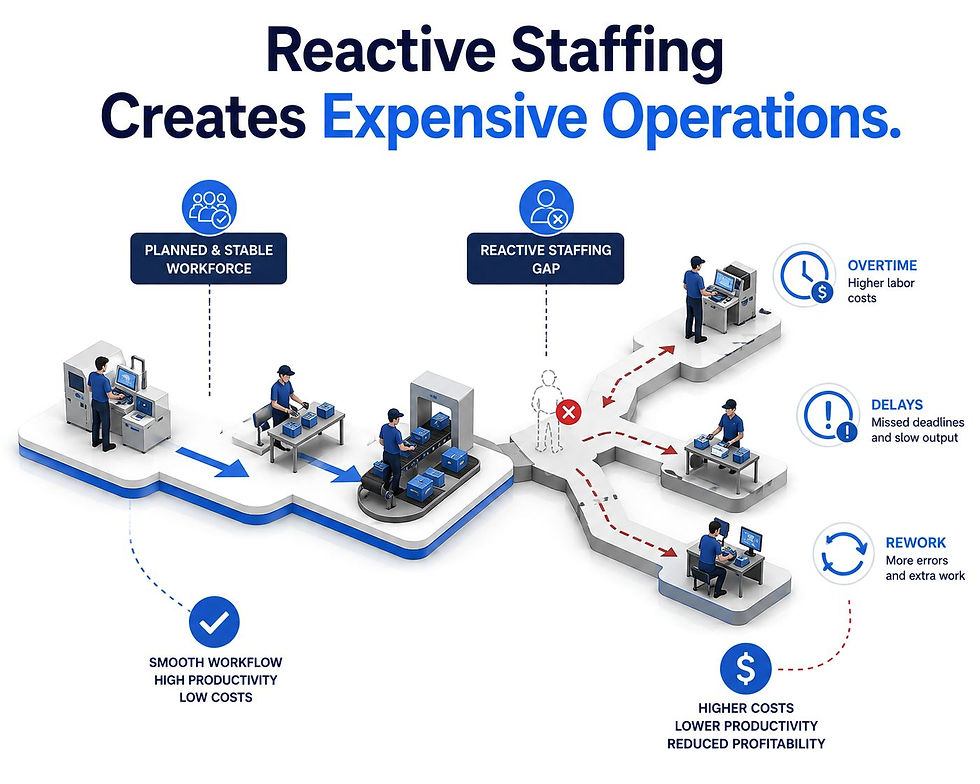
While these tactics may solve immediate coverage problems, they create a cycle of instability. The workforce becomes unpredictable, and employees may feel overworked or unprepared. This leads to:
Increased labor costs from overtime pay and last-minute hires
Lower productivity as employees adjust to unfamiliar roles or rushed schedules
Higher error rates and rework due to fatigue or lack of training
Employee burnout and turnover from constant pressure and lack of planning
These issues compound quickly. A single absence can ripple through the organization, causing delays and inefficiencies that affect customers and the bottom line.
The True Cost of Filling Shifts Without a Plan
Filling open shifts is not the same as maintaining operational stability. Reactive staffing hides costs that often go unnoticed until they become serious problems:
1. Overtime Expenses Add Up
Overtime pay rates are typically 1.5 times or more the regular wage. When organizations rely heavily on overtime, labor costs rise sharply. For example, a manufacturing plant that uses overtime to cover 10% of shifts may spend 20-30% more on labor than planned.
2. Productivity Drops When Employees Switch Roles
Moving employees between roles without proper training or notice reduces efficiency. A customer service rep suddenly assigned to inventory management may struggle, slowing down processes and increasing errors.
3. Quality Suffers and Rework Increases
Fatigued or stressed employees make more mistakes. These errors require rework, which wastes time and resources. In healthcare, for example, last-minute staffing changes can increase the risk of mistakes that affect patient safety.
4. Employee Morale Declines
Constant last-minute changes create uncertainty and stress. Employees may feel undervalued or overwhelmed, leading to higher absenteeism and turnover. Recruiting and training replacements adds further costs.
Building Workforce Systems for Consistency and Resilience
Sustainable performance requires moving beyond reactive staffing. Organizations need workforce systems designed to prevent gaps and manage coverage proactively.
Strategic Staffing Alignment
Align staffing levels with actual workload demands. This means analyzing historical data, forecasting future needs, and adjusting hiring and scheduling accordingly. For example, a retail chain might increase staff during holiday seasons based on sales trends rather than waiting for shortages to appear.
Workforce Planning
Develop clear plans for managing absences, peak periods, and unexpected events. This includes:
Cross-training employees to cover multiple roles
Creating flexible schedules that balance workload and employee preferences
Establishing a pool of on-call or part-time workers who can step in when needed
Reliable Coverage Models
Design coverage models that reduce last-minute changes. For example:
Use shift bidding systems to let employees choose preferred shifts in advance
Implement scheduling software that flags potential gaps early
Build buffer capacity into staffing plans to handle absences without overtime
How Human Capital Solutions Supports Long-Term Performance
At Human Capital Solutions, we help organizations reduce operational instability by creating workforce strategies that focus on long-term success. Our approach includes:
Assessing current staffing practices to identify hidden costs and risks
Designing staffing models aligned with business goals and workload patterns
Implementing workforce planning tools and training programs
Supporting change management to ensure smooth adoption of new systems
By planning ahead and building reliable coverage, organizations can avoid the costly cycle of reactive staffing and improve overall efficiency.
Practical Steps to Start Moving Away from Reactive Staffing
Organizations ready to improve operational stability can begin with these actions:
Analyze your current staffing data to identify patterns of last-minute changes and overtime use
Engage employees in scheduling discussions to understand their needs and build buy-in
Invest in scheduling and workforce management tools that provide visibility and forecasting
Develop cross-training programs to increase flexibility without sacrificing quality
Create contingency plans for common disruptions like illness or seasonal demand spikes
These steps help build a workforce system that supports consistent performance and reduces costly surprises.


Comments